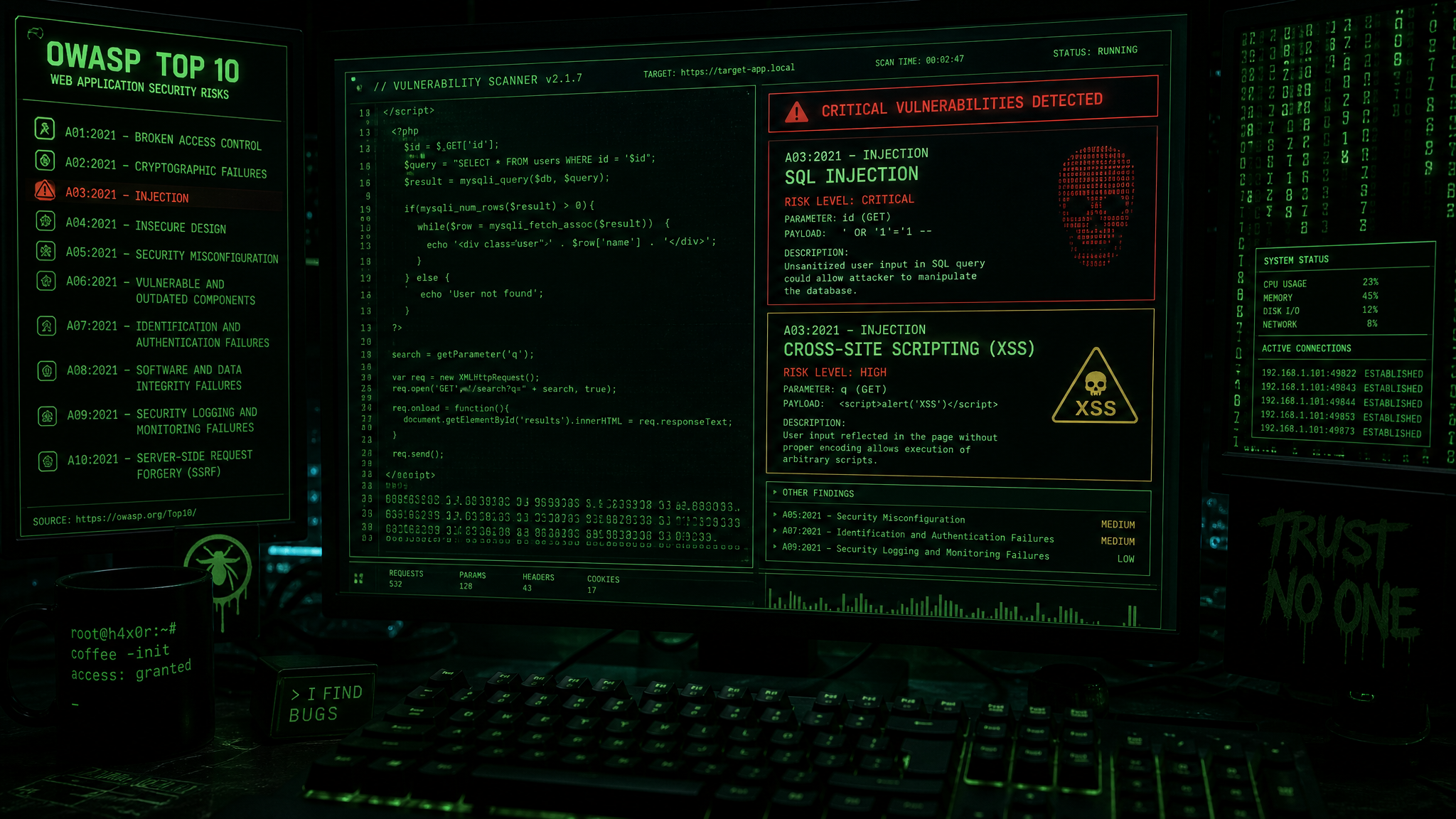
What is OWASP Top 10?
OWASP (Open Web Application Security Project) is an international non-profit organization that publishes the Top 10 most critical web application security risks. In 2025, it remains the most practical starting point for developers, administrators, and business owners who want to reduce real-world attack exposure.
OWASP Top 10 is not just a checklist. It reflects the patterns security teams see in penetration tests, incident response, and breach investigations. For modern websites, it is especially important because threats now target APIs, cloud environments, CI/CD pipelines, and third-party dependencies as often as the application itself.
OWASP Top 10 Threats Every Website Should Know
1. Broken Access Control
This happens when users can access data or functions they should not see. Typical examples include IDOR issues, missing role checks, and privilege escalation. Protect against it with server-side authorization checks, least privilege, and direct object reference validation.
2. Cryptographic Failures
These risks appear when data protection is weak or misconfigured. Common problems include outdated TLS settings, weak ciphers, poor key management, and storing secrets or passwords incorrectly. Use modern TLS, strong hashing such as bcrypt or Argon2 for passwords, and proper secret storage.
3. Injection
SQL injection, command injection, and XSS remain among the most dangerous threats because attackers can control what the application executes or displays. Defend against them with parameterized queries, strict input validation, output encoding, and a secure Content Security Policy.
4. Insecure Design
This category covers weaknesses built into the application logic itself, such as missing rate limits, weak password recovery flows, or business logic abuse. These issues require secure design reviews, threat modeling, and abuse-case testing before release.
5. Security Misconfiguration
Incorrect server, framework, or cloud settings often expose sensitive data or unnecessary functionality. Examples include debug mode in production, verbose error messages, open admin panels, and missing security headers such as CSP, HSTS, and X-Frame-Options.
6. Vulnerable and Outdated Components
Libraries, plugins, CMS modules, and frameworks can introduce known vulnerabilities if they are not updated. Maintain an inventory of dependencies, monitor CVEs, and remove unsupported components as soon as possible.
7. Identification and Authentication Failures
Weak login logic, poor session handling, and missing MFA make account takeover easier. Use strong password policies, secure session cookies, login throttling, and multi-factor authentication for all privileged users.
8. Software and Data Integrity Failures
Attackers may tamper with code, updates, or build pipelines if integrity checks are missing. Protect your CI/CD process with signed artifacts, trusted repositories, code review, and dependency verification.
9. Security Logging and Monitoring Failures
Without proper logs, attacks may go unnoticed for weeks. Log authentication events, privilege changes, failed requests, and suspicious API activity. Centralize alerts and test your incident response process regularly.
10. Server-Side Request Forgery
SSRF allows attackers to force the server to make unwanted requests, often toward internal services or cloud metadata endpoints. Block access to private networks, validate destinations, and restrict outbound connections where possible.
How to protect your web application
- Run regular penetration tests against the application, APIs, and admin panels.
- Perform code reviews and secure design reviews before new features go live.
- Keep software updated, including frameworks, libraries, and CMS plugins.
- Harden configuration by removing debug features and enabling security headers.
- Use MFA, least privilege, and session protections for users and administrators.
- Monitor logs and alerts to detect abuse, brute force, and data exfiltration early.
Why choose MonMyIP?
At MonMyIP, we help organizations identify vulnerabilities before attackers do. Our security testing services include web application penetration testing, configuration audits, and practical remediation guidance tailored to your environment.
If you want to assess your website against OWASP Top 10 risks, contact MonMyIP for a professional security review and strengthen your defenses before the next attack.